
Logan Schröder · 6 November 2026
Balkan Environmental Accords Shift Technology Governance and Recovery Routes in Adjacent Territories
Environmental agreements signed among Balkan nations have begun to alter how technology oversight operates across the region, while also shaping economic recovery strategies in neighboring countries, with data from monitoring programs showing measurable changes in regulatory frameworks by late 2025. These pacts focus on reducing industrial emissions, managing electronic waste streams, and integrating green standards into digital infrastructure projects, which in turn affects how neighboring states handle their own tech policies and post-industrial rebuilding efforts.
Core Elements of the Agreements
Countries including Serbia, North Macedonia, and Albania established joint targets for lowering carbon output from data centers and manufacturing hubs, while committing to shared monitoring systems that track cross-border pollution from tech-related activities. Observers note that these commitments extend into supply chain requirements, requiring companies to adopt certified recycling methods for hardware components. Research from regional environmental bodies indicates that implementation phases started in early 2025, with full compliance deadlines set for 2028 in most signatory states.
Neighboring regions such as parts of Romania and Bulgaria have adjusted their oversight mechanisms in response, incorporating similar emission caps for new technology installations. This alignment stems from trade dependencies, where Balkan suppliers provide components to factories further north, and regulatory mismatches could disrupt those flows. Figures released by the European Environment Agency reveal that cross-border data exchanges on compliance metrics increased by 35 percent between 2024 and 2025, supporting coordinated enforcement efforts.
Technology Oversight Adjustments
Tech companies operating in the Balkans now face stricter reporting on energy consumption and material sourcing under the new deals, with authorities requiring quarterly submissions on server farm efficiency and e-waste disposal volumes. Those who've studied these developments point out that the rules extend to foreign firms through partnership clauses, compelling adjustments in product design to meet Balkan-specific environmental benchmarks. In November 2026, scheduled reviews will assess progress on these metrics, drawing input from both local regulators and international observers.
Recovery pathways in adjacent areas benefit from technology transfers tied to these environmental standards, as funding mechanisms support upgrades to cleaner production lines. Data shows that investment in green tech infrastructure rose notably in border zones, linking environmental compliance directly to job creation in recovery zones. Experts have observed that this integration reduces duplication in regulatory reviews, allowing faster approval cycles for projects that meet both environmental and digital expansion goals.
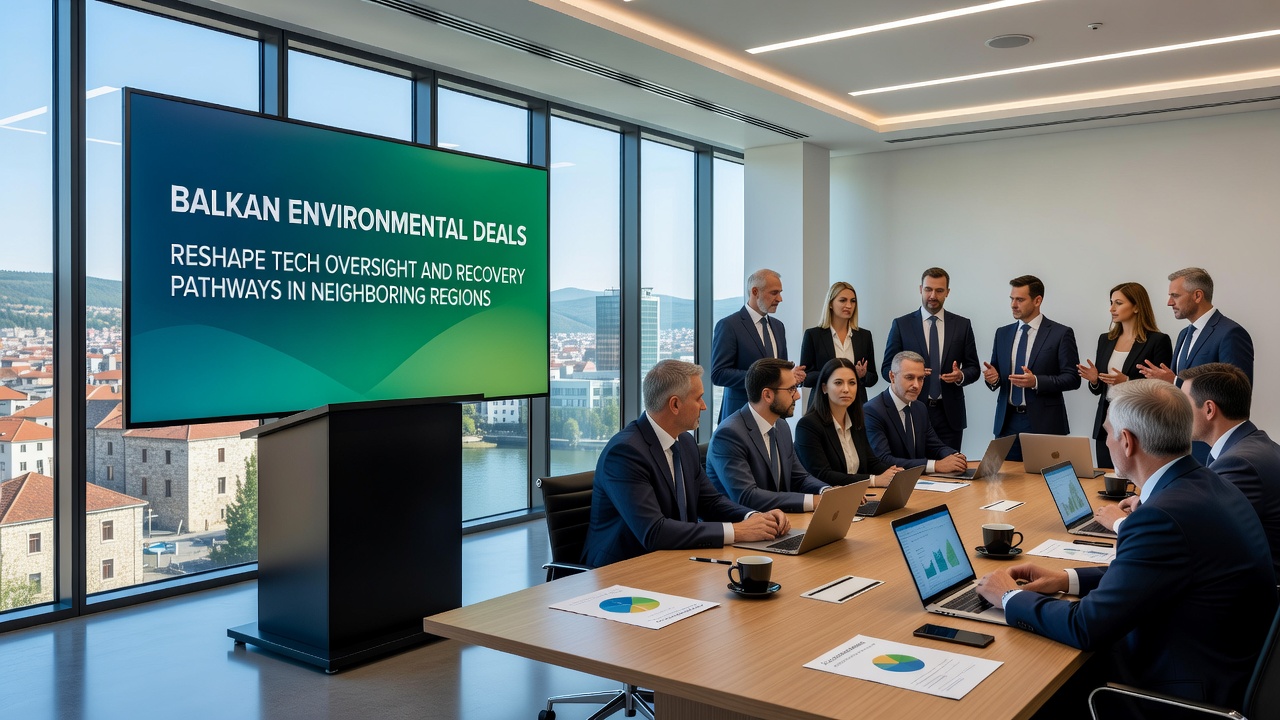
Impacts on Neighboring Recovery Efforts
Economic rebuilding programs in areas bordering the Balkans have incorporated lessons from these environmental pacts, particularly in sectors recovering from earlier industrial declines. According to an OECD environmental outlook report, coordinated policies help stabilize supply chains by ensuring consistent standards across borders, which supports sustained investment. Recovery initiatives now include provisions for tech-enabled monitoring tools that track environmental indicators alongside economic output, creating more resilient pathways for long-term growth.
University-led studies from institutions across Central Europe have documented how these deals influence policy schedules, with electoral cycles in neighboring states often aligning environmental commitments with technology upgrade timelines. Evidence suggests that shared databases for compliance data reduce administrative burdens, freeing resources for direct recovery projects such as site remediation and workforce retraining. What's significant is the way these arrangements connect environmental targets to broader trade networks, where compliance opens access to funding streams otherwise restricted.
Broader Regional Connections
Observers note that the Balkan agreements intersect with larger European Union directives on digital sustainability, prompting adjustments in how non-EU neighbors approach their own oversight systems. This includes harmonized approaches to artificial intelligence energy use and blockchain verification for supply chain traceability. Research indicates measurable drops in unregulated e-waste exports from the region since the deals took effect, benefiting recovery zones that previously managed higher volumes of discarded hardware.
Industry groups tracking these trends report that companies adapting early to the combined environmental and tech rules gain competitive edges in cross-border contracts. A Canadian government analysis on international environmental cooperation highlights similar patterns in other regions, where joint pacts accelerate technology adoption in rebuilding economies. By November 2026, additional progress reports will detail further refinements based on initial implementation data.
Conclusion
The ongoing evolution of these Balkan environmental deals continues to influence technology governance structures and recovery strategies in neighboring territories through shared standards and coordinated monitoring. Data from multiple sources shows steady integration of these elements into national policies, with scheduled assessments providing updates on outcomes. This pattern of interconnected environmental and technological requirements supports more unified approaches to regional development challenges across the area.