Ben Butler · 25 September 2026
Global Migration Shifts Reveal Deep Ties to Trade and Investment Networks
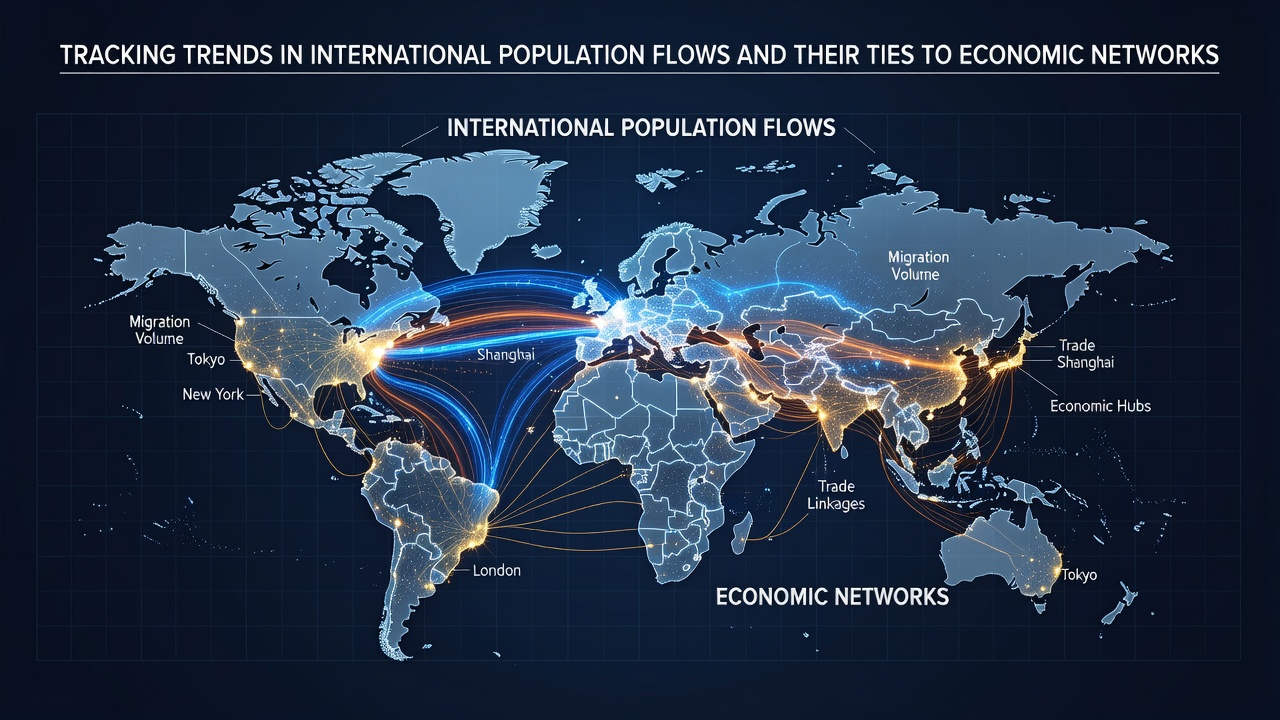
International population movements continue to reshape labor markets and capital flows across continents, with data from multiple agencies showing consistent patterns between migration corridors and established economic networks. Researchers tracking these trends note that people often relocate along pathways already strengthened by trade agreements and investment ties, while remittances in turn reinforce those same connections.
In September 2026 the United Nations Population Division released updated estimates indicating that net international migration reached 18.5 million people in the previous year, with Asia and Africa supplying the largest shares of outflows toward Europe and North America. Observers note that these numbers align closely with regions hosting the densest clusters of multinational supply chains and foreign direct investment.
Current Data Patterns in Population Flows
Figures compiled by the OECD show that labor mobility between member countries and select partner economies grew by 7 percent between 2023 and 2025, driven primarily by demand in technology, healthcare, and logistics sectors. Those who've examined the datasets point out that countries receiving higher volumes of skilled migrants also report elevated levels of cross-border mergers and acquisitions in the same industries.
Short-term visa issuances and permanent residency grants have both risen in corridors linking Southeast Asia to Gulf Cooperation Council states, where construction and energy projects draw temporary workers whose earnings flow back through formal banking channels. Data indicates these financial transfers now exceed 150 billion dollars annually in several bilateral relationships, sustaining local consumption and further embedding economic interdependence.
Economic Networks Reinforced by Remittances and Skills Transfer
Remittance volumes tracked by the World Bank reached 685 billion dollars in 2025, with the largest corridors running from the United States to Mexico, from the Gulf states to South Asia, and from Western Europe to North and West Africa. Analysts examining these figures observe that recipient households frequently invest portions of the funds in small enterprises that later participate in regional value chains connected to the same destination economies.
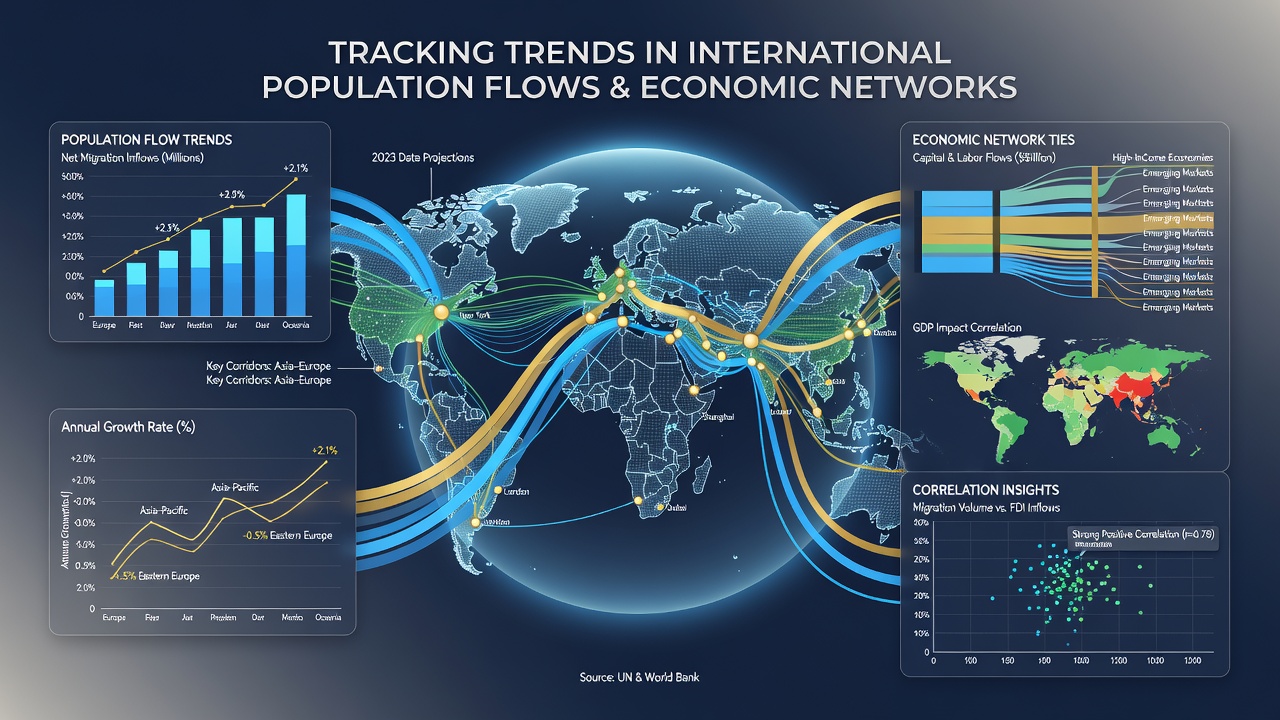
Skills circulation follows similar routes. Engineers trained in Germany and employed temporarily in Canadian resource projects often return home with expertise that supports joint ventures between European and North American firms. Similar patterns appear in the movement of medical professionals between the Philippines and several Gulf healthcare systems, where bilateral training agreements facilitate both labor mobility and technology transfer.
Regional Examples and Measurement Approaches
One study released by the Australian Bureau of Statistics documented that net overseas migration contributed 60 percent of Australia's population growth in the year ending June 2026, concentrated in states with strong mining and renewable energy exports. Those studying the data note parallel increases in foreign investment approvals from the same source countries supplying the largest migrant cohorts.
Within the European Union, Eurostat records show intra-EU mobility stabilizing after earlier spikes, while extra-EU inflows from North Africa and the Western Balkans continue to track investment patterns under the EU's neighborhood economic programs. Officials monitoring these statistics report that regions with established trade preferences receive proportionally higher numbers of work-related residence permits.
Measurement Challenges and Emerging Tools
Accurate tracking remains difficult because many movements occur outside formal visa systems, yet satellite data on nighttime lights and mobile phone records now supplement traditional census methods. Researchers at several academic centers combine these sources with customs and foreign investment registries to map correlations between population density changes and new trade infrastructure.
Projections released in September 2026 suggest that climate-related displacement could add several million additional movements by 2035, concentrated in areas already integrated into global agricultural and energy supply chains. Agencies preparing for these shifts emphasize the need for coordinated data sharing across national statistical offices to maintain visibility into both human and capital flows.
Conclusion
Evidence from multiple international organizations demonstrates that population movements and economic networks evolve in tandem rather than in isolation. Continued refinement of data collection methods will allow policymakers and businesses to anticipate where future corridors may strengthen or shift, based on observable linkages between migration volumes, remittance patterns, and cross-border investment decisions.